Over my career as a Product Manager building products from 0 → 1, one of the most rewarding – and challenging – parts has been pricing.
Every organization has its own templates and processes. But one truth remains constant:
Pricing shapes the customer behavior you want.
In this case, I was working on a product that was new to my organization—but not new to the market. Competitors already had similar offerings. Ours, of course, had more features and a stronger value proposition. The expectation was clear: this product would ease competitive pressure and unlock new opportunities.
Pricing would be critical.
Subscription was a given.
The real question was: what should the metric of pricing be?
What I did
I approached pricing the way most product managers do – methodically.
- Studied the market: competitor pricing models and metrics
- Benchmarked internally: where this product fits within our product portfolio and the pricebook
- Built cost models: margins, variability across regions
- Explored pricing metrics: what should customers actually pay for?
- Talked to customers: hundreds of conversations to understand urgency and willingness to pay
- Exchanged notes with my colleagues who had been through a similar pricing exercise for their products. How do we navigate through the various stakeholders?
I spent a disproportionate amount of time on cost. The product had global variability, which made pricing tricky. A region-based model added complexity.
And that led to an important realization:
The more complex your pricing, the more time you’ll spend explaining it to sales teams and customers for the lifetime of the product.
Simplicity matters more than we admit.
I leaned on past pricing exercises, but this product was different. There wasn’t a clear precedent. I spoke to peers, tried to understand how decisions were really made, and eventually narrowed it down to two viable pricing options.
I was ready.
What actually happened
I got two minutes with leadership.
They picked a number.
They picked a metric.
That was it.
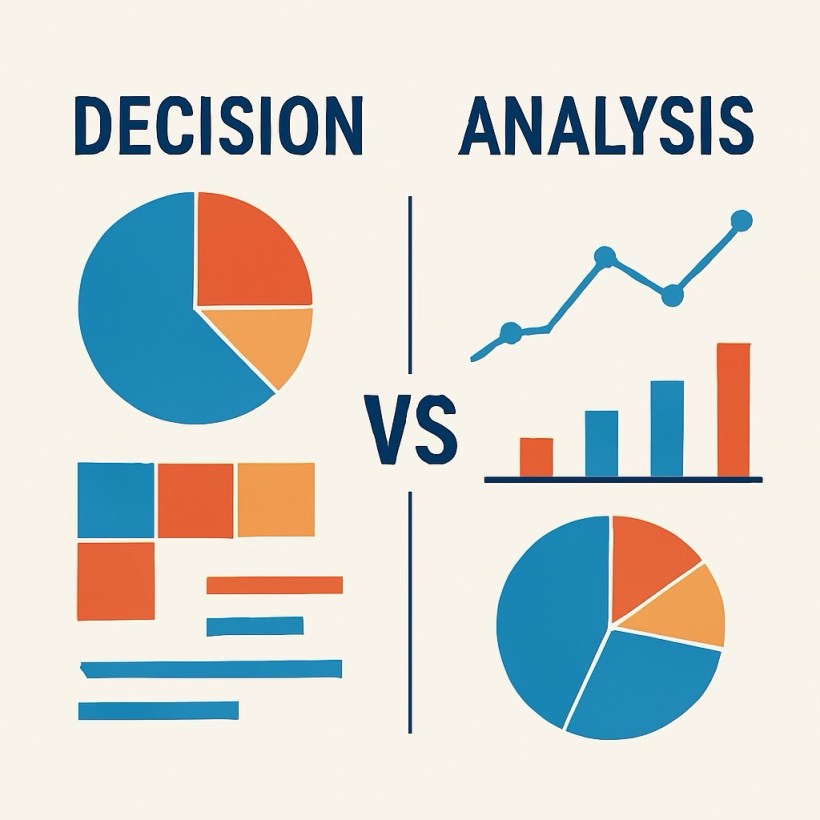
Everything I had built – analysis, models, customer insights – became supporting material for a decision that was already made.
Even when there were differing views later, the outcome didn’t change.
What I learned
At first, it felt like the work didn’t matter.
But over time, I realized I was solving only part of the problem.
I was operating in what I now think of as:
The Three Layers of Pricing Decisions
- Analytical Layer
Data, competition, customer value
(where I spent most of my time) - Strategic Layer
Market positioning, revenue goals, portfolio alignment - Decision Layer
Who makes the call and when the decision is actually made
Most product managers focus on Layer 1.
Pricing decisions are made in Layers 2 and 3.
The takeaway
If you’re responsible for pricing, your job isn’t just to find the right number.
It’s to:
- Understand how the decision will be made
- Engage early – before options narrow
- Align your work to the people who own the outcome
Because by the time you’re presenting your analysis, the decision may already be made.


